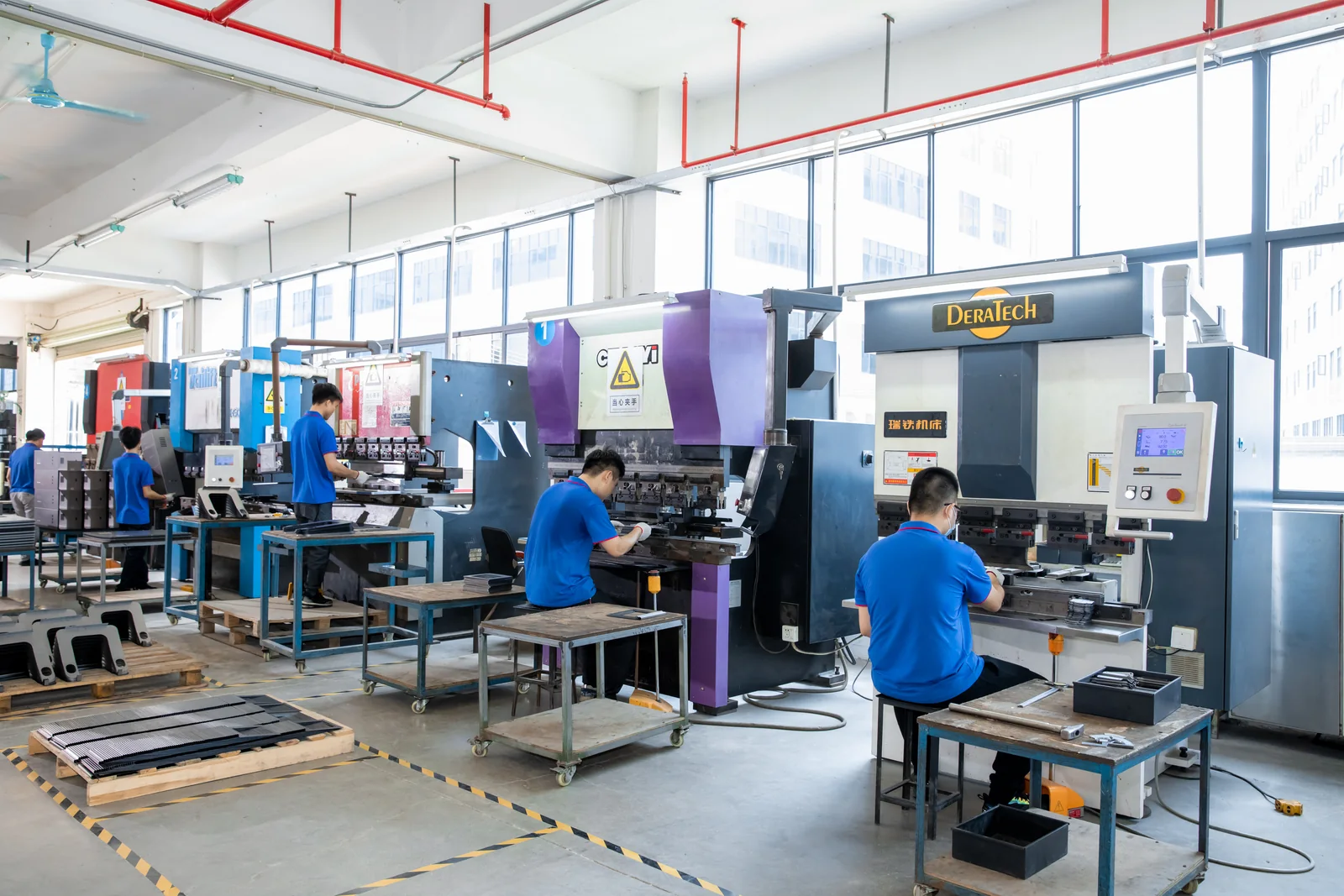
CNC bending machines and operators in the Jinghongjian workshop

Process services

Cutting & forming

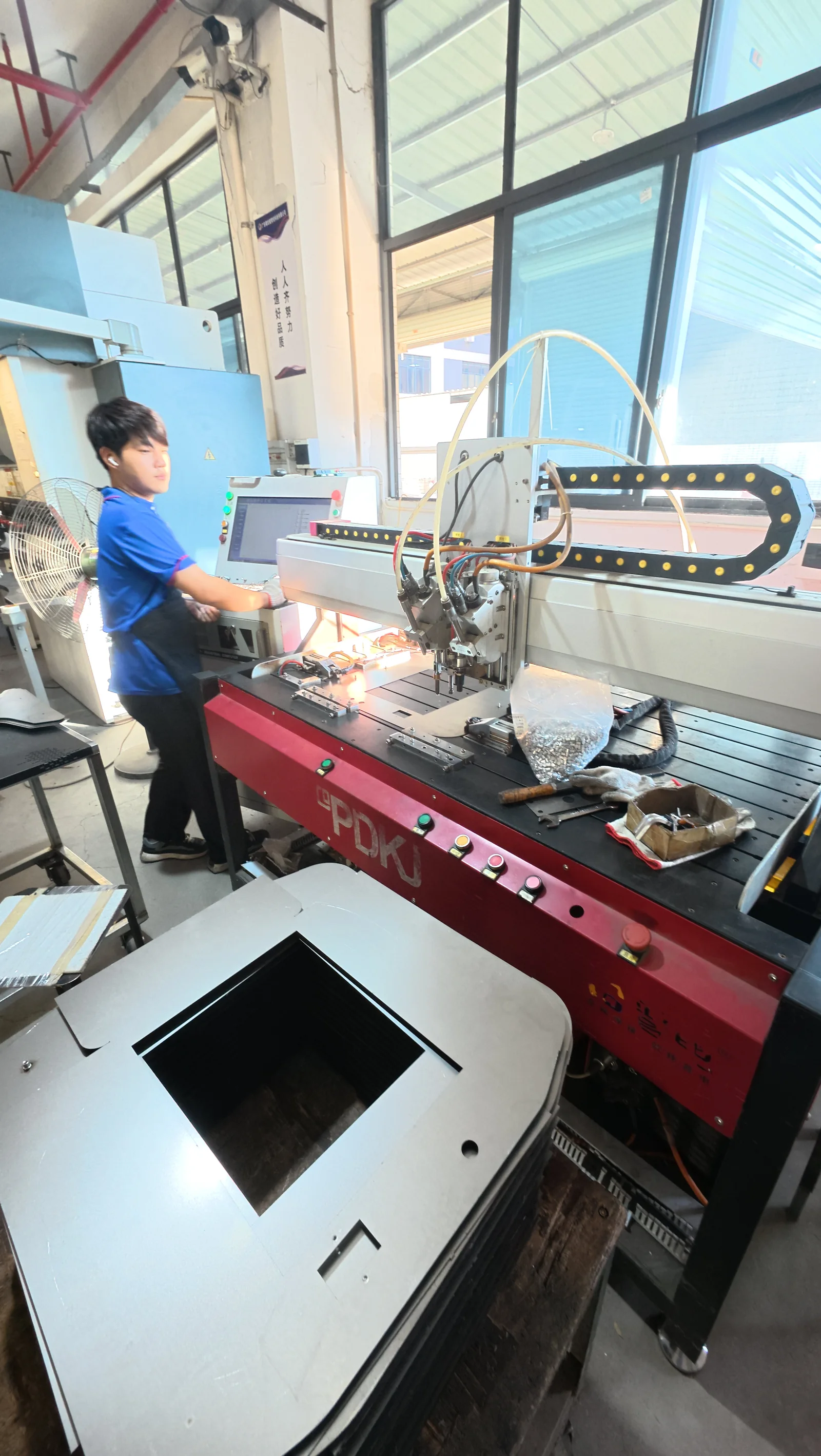
An operator fastening studs to a metal panel
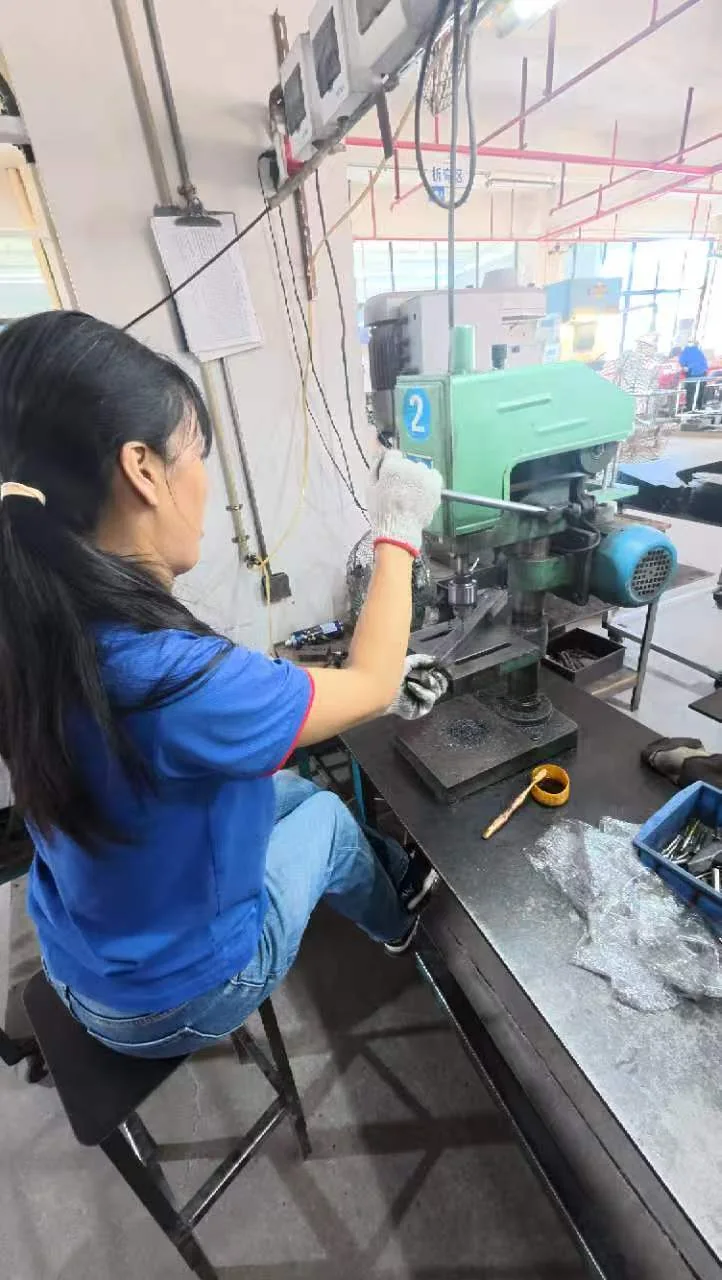
An operator machining holes in a sheet-metal part
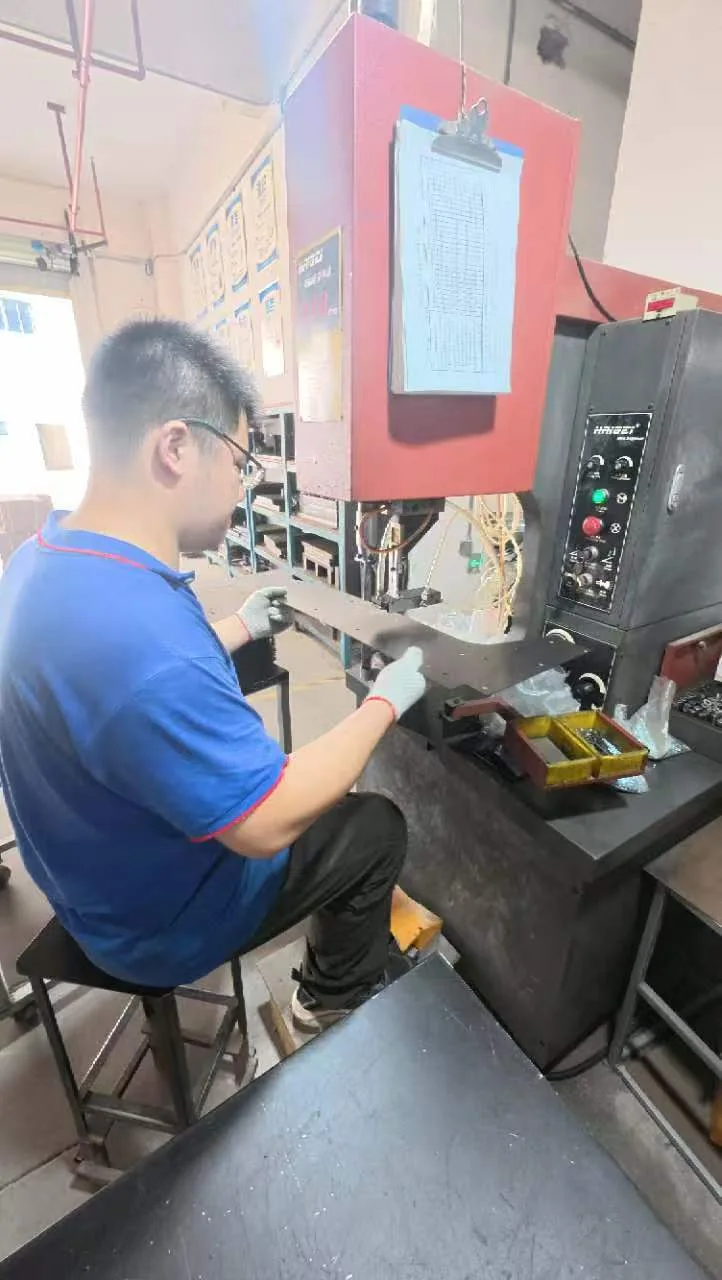
An operator fitting fasteners with a clinching press

Stud fastening, countersinking & clinching

Our integrated drilling, countersinking, clinching and stud-fastening capabilities produce threaded connections and fitted fasteners to the drawing, including M5, M7 and other specified sizes. Accurate hole positions, secure fastening and flush assembly provide a reliable foundation for final product assembly.

Process details
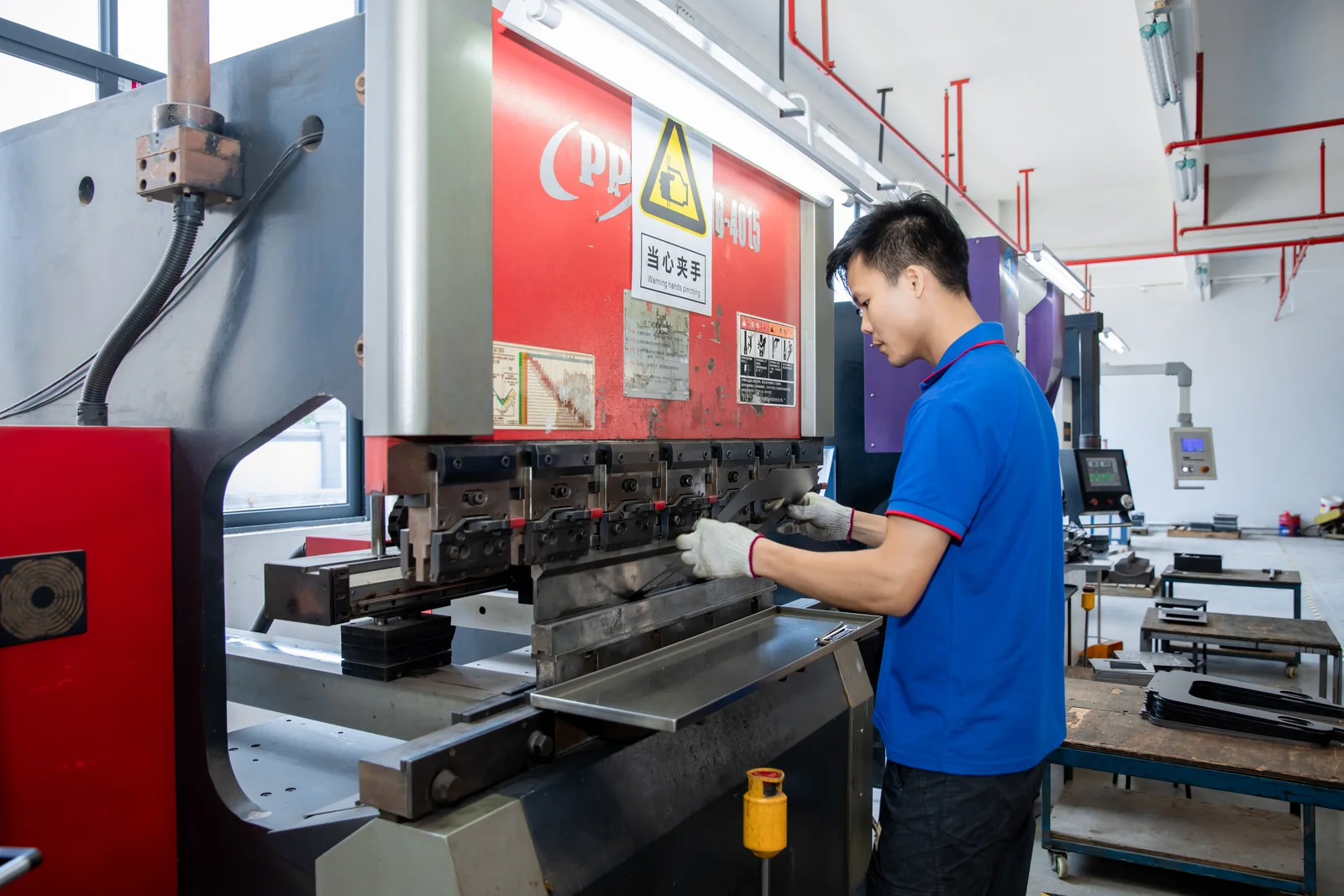
A Jinghongjian operator forming a sheet-metal part on a CNC press brake

CNC bending

Our 100-tonne CNC bending equipment has a stated maximum bending length of 3.2 metres. Long chassis, cabinet and electrical enclosure parts can often be formed without splicing, creating a cleaner appearance and stronger structure. Carbon steel up to 6 mm and stainless steel up to 4 mm can be processed with consistent bend angles across a production batch.

Process details
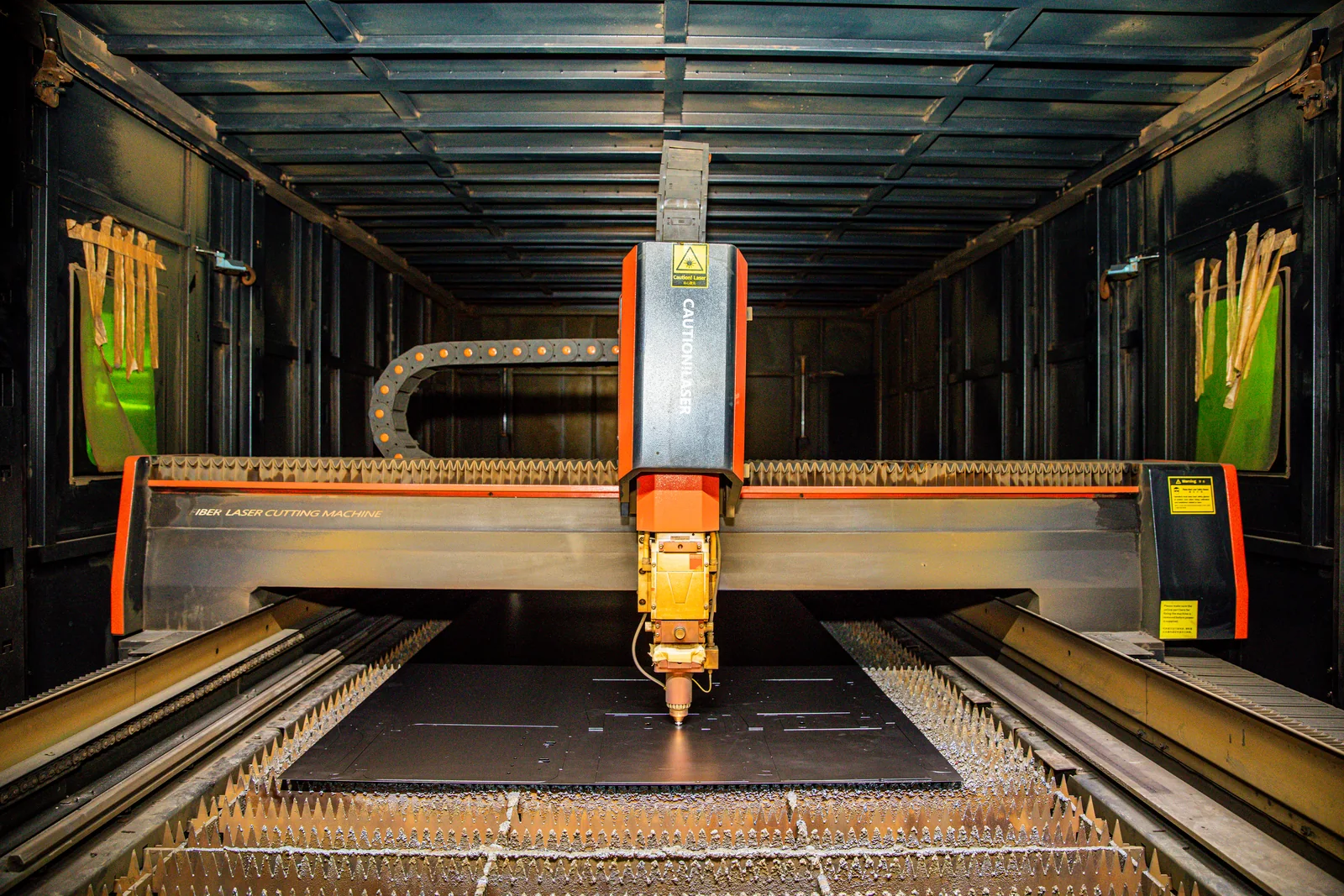
The cutting bed and cutting head of a fibre laser machine

Laser cutting

Fibre lasers rated at 3,000 W and 20,000 W handle precision thin-sheet cutting and high-speed cutting of thicker plate. Clean edges, a small heat-affected zone and minimal burrs prepare accurate blanks for later operations. Programs are generated directly from drawings without tooling, while intelligent nesting improves material utilisation.

Process details
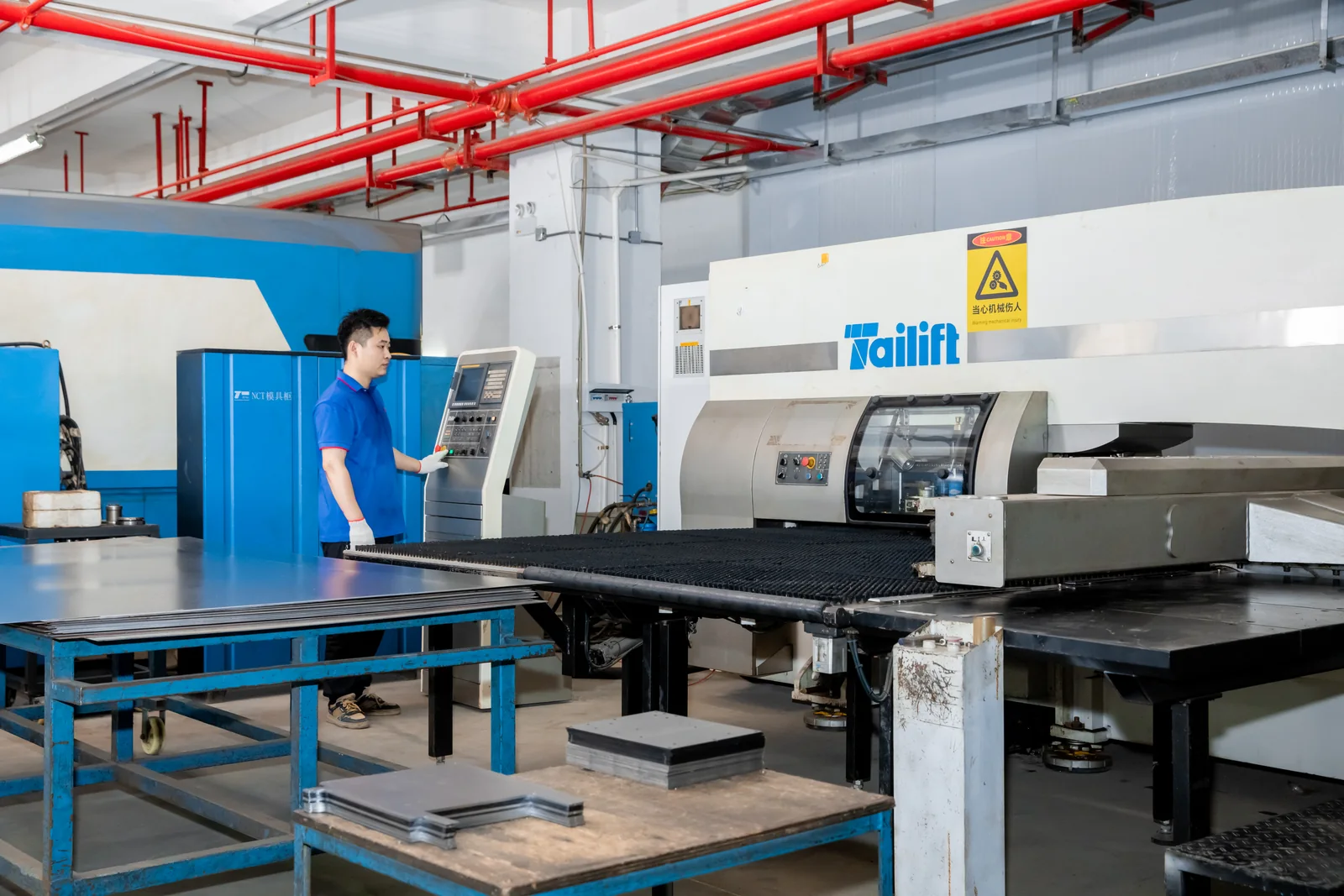
A Jinghongjian operator processing sheet material on a CNC punch press

Stamping & CNC punching

CNC punching efficiently creates standard, ventilation and irregular holes, as well as embossing, flanges and louvres. For established designs in large volumes, dedicated stamping dies further improve throughput and reduce unit cost while maintaining consistent dimensions.

Process details

Joining & refining

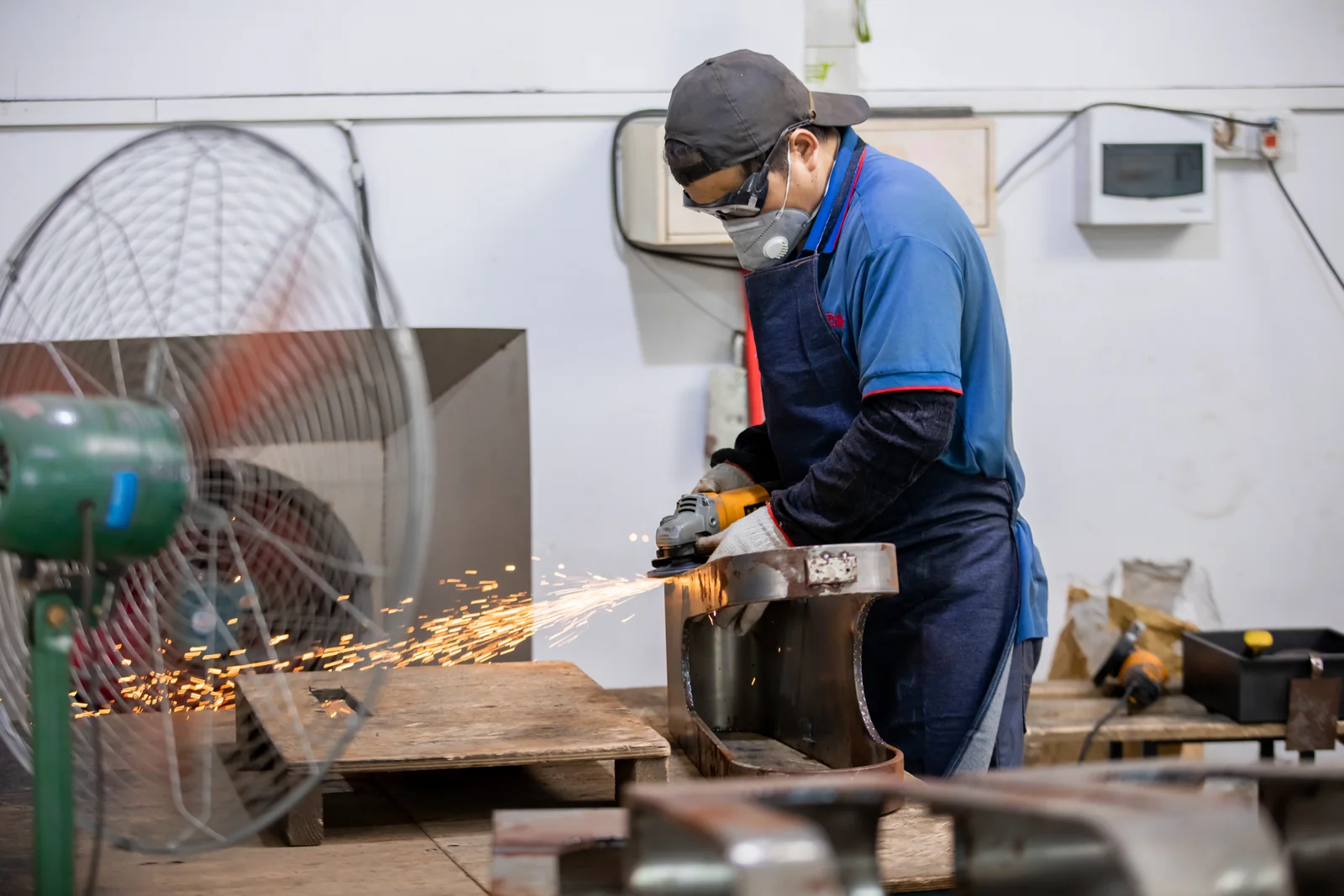
A Jinghongjian operator grinding the surface of a metal part

Grinding & polishing

Progressive rough grinding, fine grinding, polishing and brushing remove weld marks and burrs. Smooth weld transitions and rounded edges improve handling and create an even surface texture, enhancing appearance and preparing a suitable base for subsequent coating.

Process details
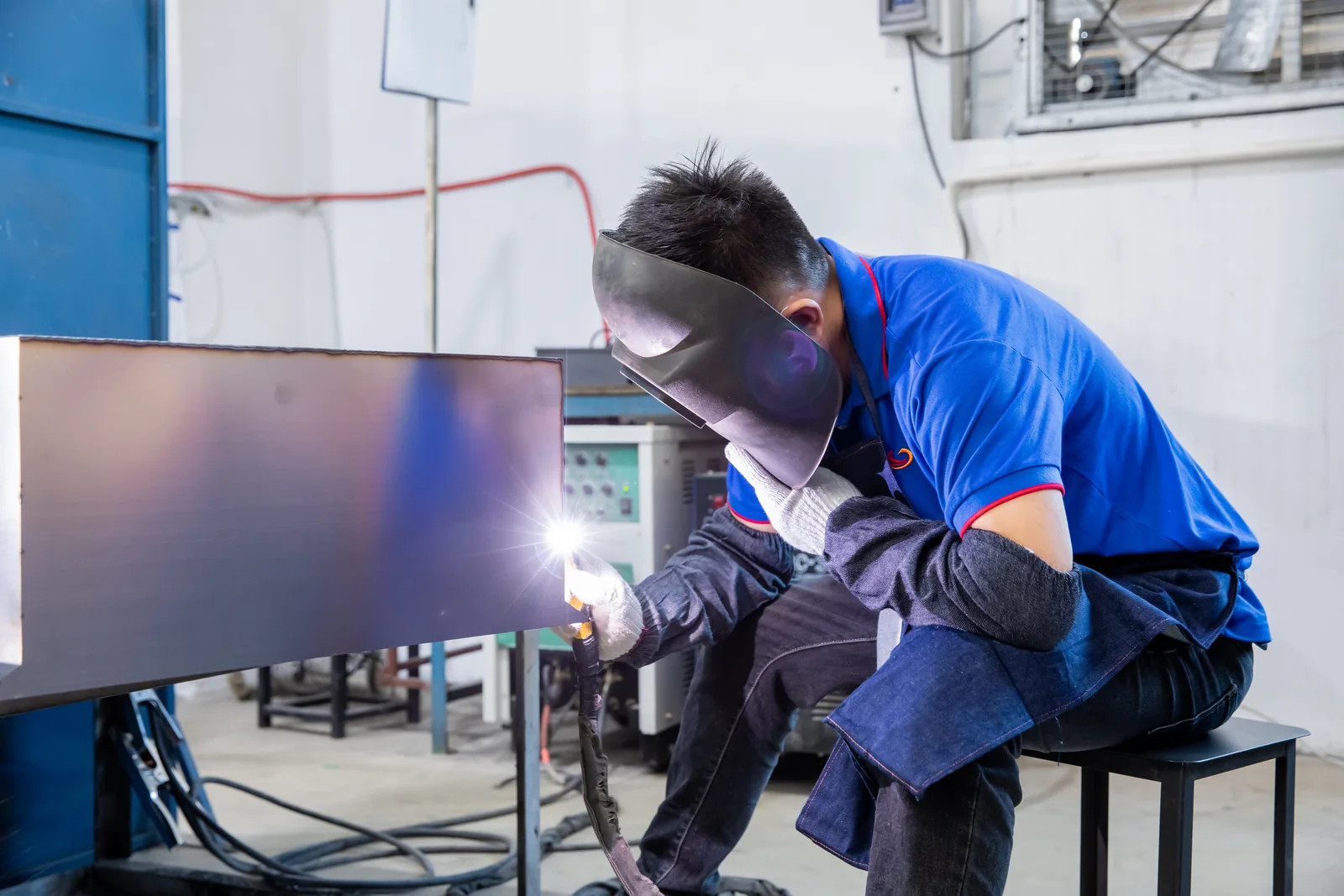
A Jinghongjian welder wearing a protective helmet while welding a metal enclosure
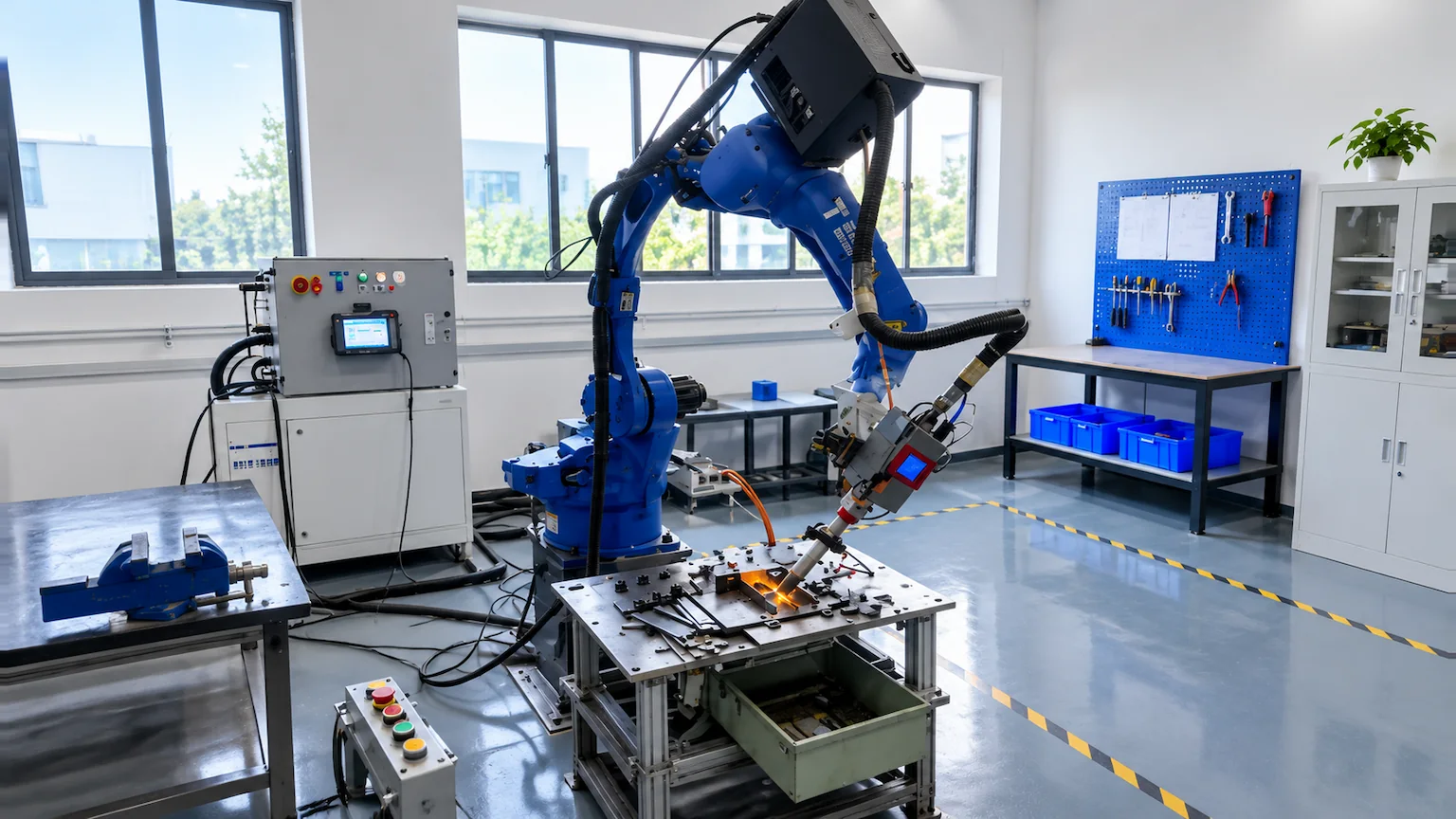
A robotic welding station at Jinghongjian

Welding

CO₂-shielded, laser and TIG welding are selected to suit the material, thickness and appearance requirements. Accurate fixtures and distortion control balance weld strength with a clean finish, keeping structural connections secure and dimensions stable.

Programmed robotic welding controls the path, speed and process settings for uniform seams. It reduces operator variation and distortion, supporting stable, efficient batch production where weld consistency and delivery schedules are critical.

Process details

Surface coating

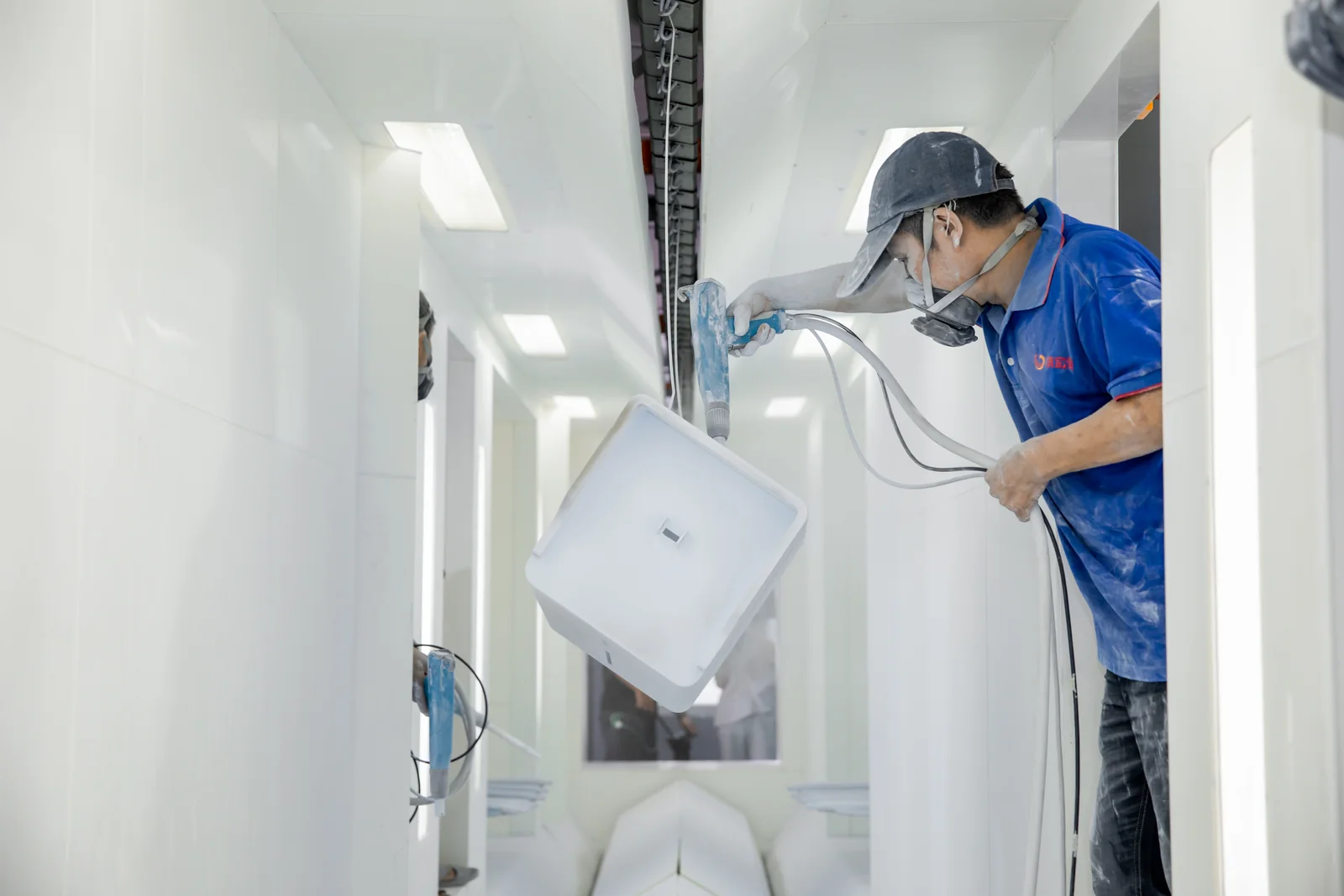
An operator applying electrostatic powder coating to a metal housing

Powder coating

Electrostatic powder application and heat curing produce a coating thickness of 60–120 μm, with even coverage across faces and edges. The specified coating system achieves over 400 hours in neutral salt-spray testing and 50 kg·cm impact resistance. It supports outdoor and coastal applications, with smooth, matt, fine-textured and sand-textured finishes available.

Process details
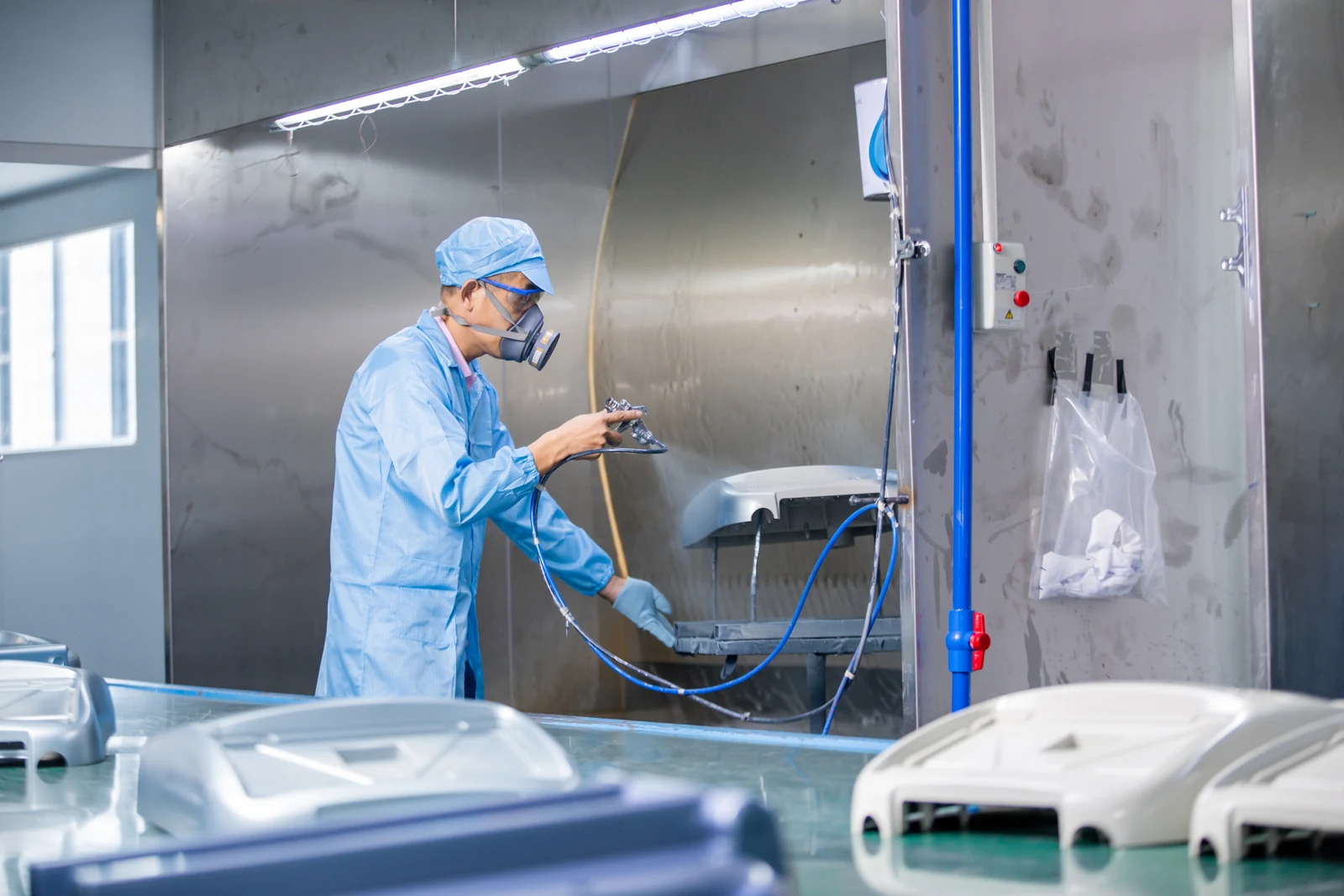
An operator using a hand-held spray gun to paint a housing in the spray booth

Liquid painting

Liquid painting suits visible parts with demanding colour, gloss and detail requirements, including parts unsuitable for high-temperature curing. Colours can be matched to a colour card or customer sample for a rich, fine finish. Thorough sanding and degreasing before application help achieve a smooth, firmly bonded coating.

Process details

Pre- & post-treatment and inspection

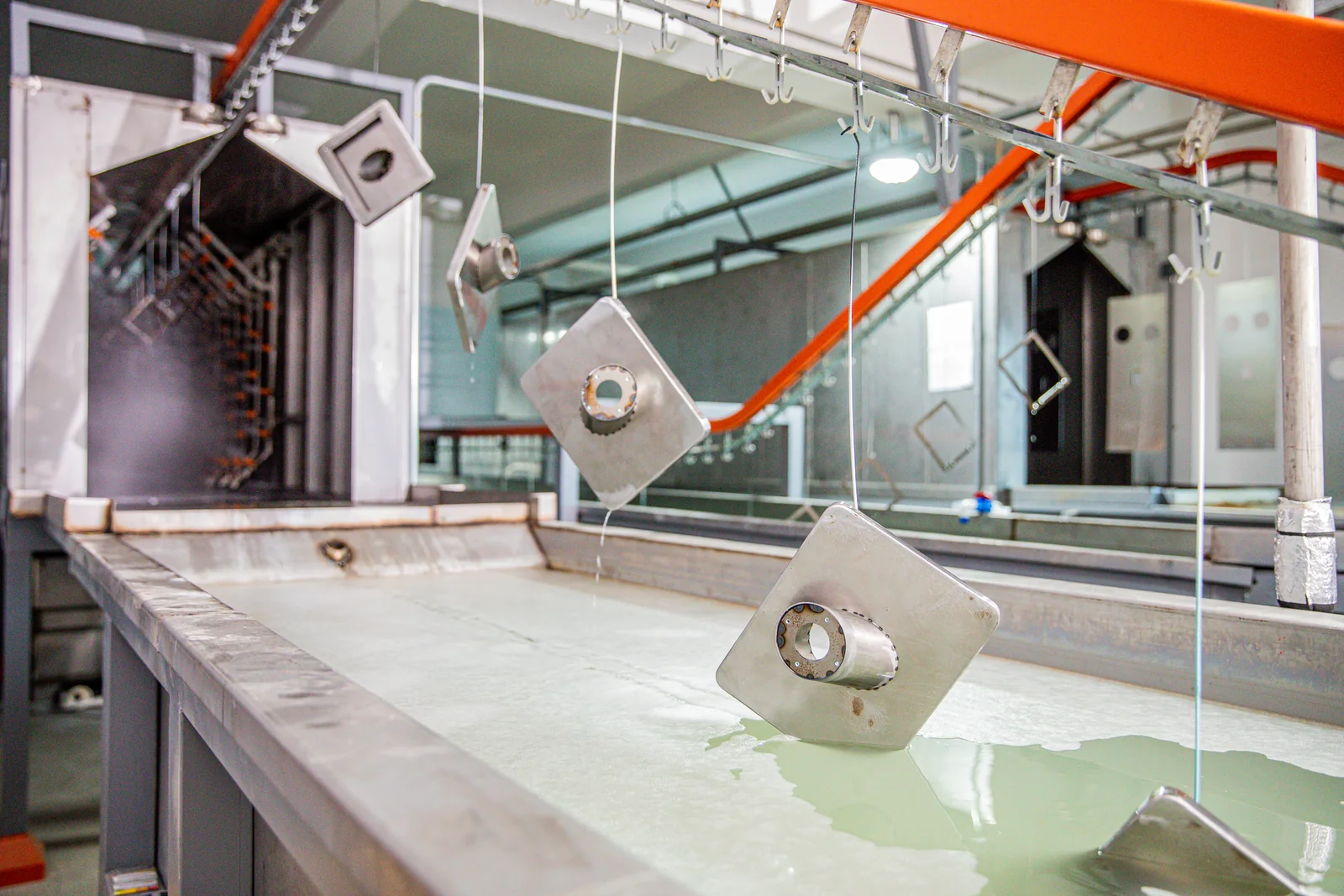
Suspended metal parts entering the surface treatment line

Pre- & post-treatment

Phosphating pretreatment and immersion treatment remove oil, rust, oxides and machining residue from metal surfaces, leaving parts clean and largely free of deposits and fibres. A uniform, dense phosphate layer improves coating adhesion and corrosion resistance, establishing the foundation for the final finish.

Process details
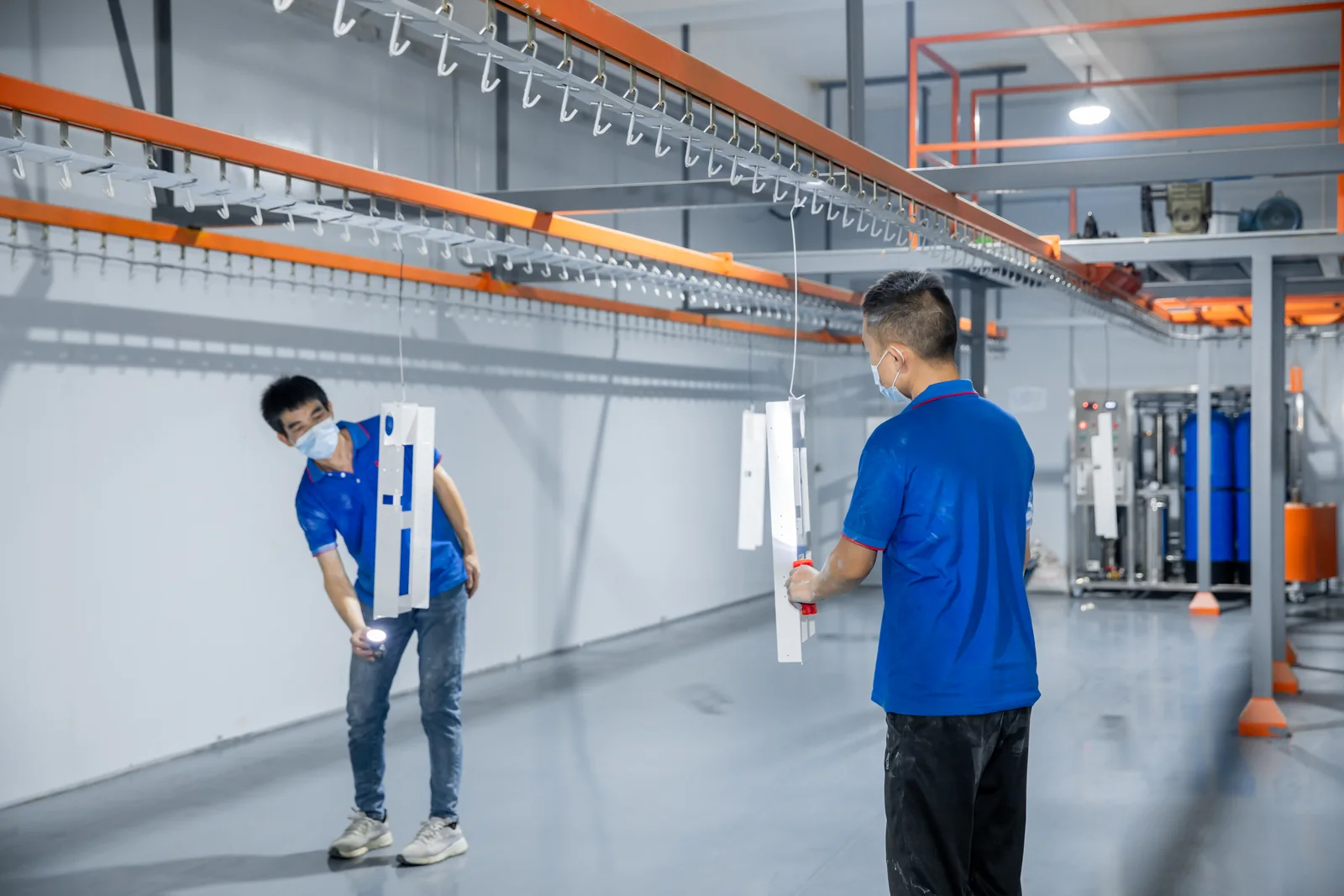
Jinghongjian inspectors checking finished coated parts on the hanging line

Piece-by-piece inspection

Finished products are inspected individually before dispatch. Checks cover appearance, dimensions, hole positions, bend angles, weld quality, fastener security and assembly fit. Results are recorded throughout; non-conforming parts are isolated and reworked so that each delivered product meets the drawing requirements.

Process details

Specialist teams

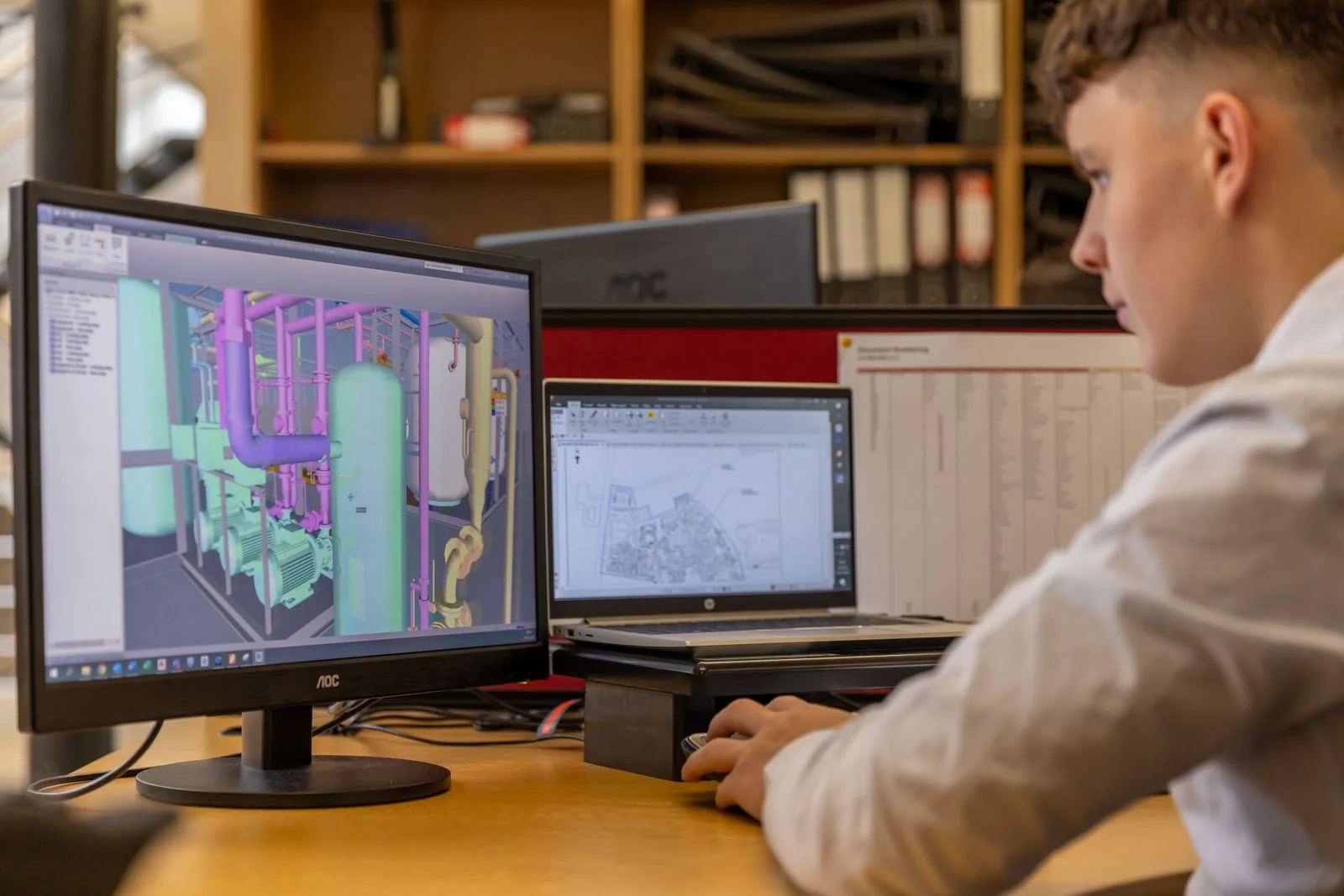
An engineer reviewing a three-dimensional industrial equipment model at a workstation

Sheet-metal engineers

Our sheet-metal engineers contribute from the start of product design. Drawing on manufacturing experience, they provide structural optimisation, sample disassembly and drawing reconstruction, and production drawings for OEM and ODM projects. They improve manufacturability and control costs while retaining the required function, helping products move efficiently from concept to volume production.

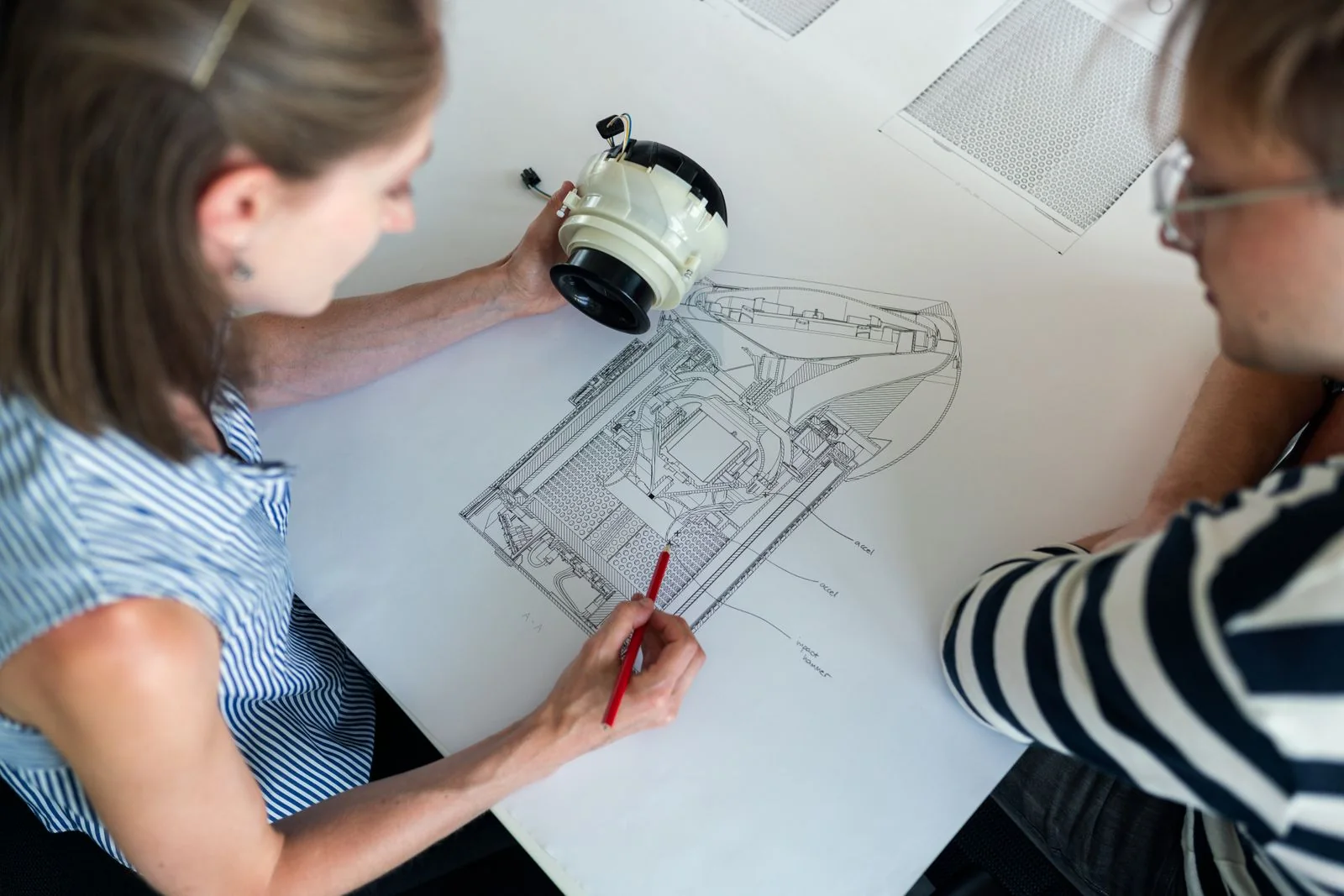
Designers discussing a design using product drawings and equipment components

Product appearance designers

Our designers develop product appearance and form around the customer’s use cases and brand requirements. They can also design complementary products to create a coherent, practical product family. Close collaboration with the engineering team carries the design through to volume production.

Manufacturing capacity

Laser cutting machines
8
CNC punching machines
18
Bending machines
20+
Conventional presses
100+